OpenAI wrote that its internal model had solved the Navier–Stokes problem—which, mind you, is one of the seven Millennium Prize Problems.
And now a huge scandal is brewing around it. Here’s the short version:
-
OpenAI claims that its internal AI constructed a proof of finite-time singularity formation for the Navier–Stokes equations with a smooth external force. The company published a 166-page preprint and a Lean formalization.
-
Meanwhile, mathematicians Tristan Buckmaster and Levent Alpöge (who works at Anthropic 🙂) spent about a year developing a similar approach with the help of Claude and Codex. Importantly, they did not publish a solution to the Navier–Stokes problem, but three related results—including a proof for the three-dimensional Euler equations with a smooth external force and its Lean formalization.
-
According to Buckmaster’s detailed statement, OpenAI began pursuing its approach after hearing rumors about their work. Buckmaster asked whether the model might have been trained on their Codex sessions, where they had uploaded drafts. According to him, he never received a direct answer about the training data.
-
Buckmaster also writes that Sébastien Bubeck twice suggested removing Alpöge from the author list because he worked at Anthropic. When Buckmaster refused and said he would go public with this, he says he was told: “Why would you want to ruin your career?”
-
OpenAI, for its part, claims that it had not seen the mathematicians’ work before it was published and did not access any specific user data. At the same time, the company does not rule out the possibility that anonymized data from the use of its products may have influenced model training.
So if you happen to be on the verge of solving another Millennium Prize Problem right now, you’d better not upload your solution to OpenAI—or Sam Altman might announce yet another GPT mathematical breakthrough tomorrow.
Primary sources
- OpenAI’s announcement, the proof preprint, and the Lean repository
- The Clay Mathematics Institute’s official statement of the Navier–Stokes problem
- Tristan Buckmaster’s statement and the original announcement post
- Buckmaster and Alpöge’s preprint on the Euler equations and the Lean formalization of their results
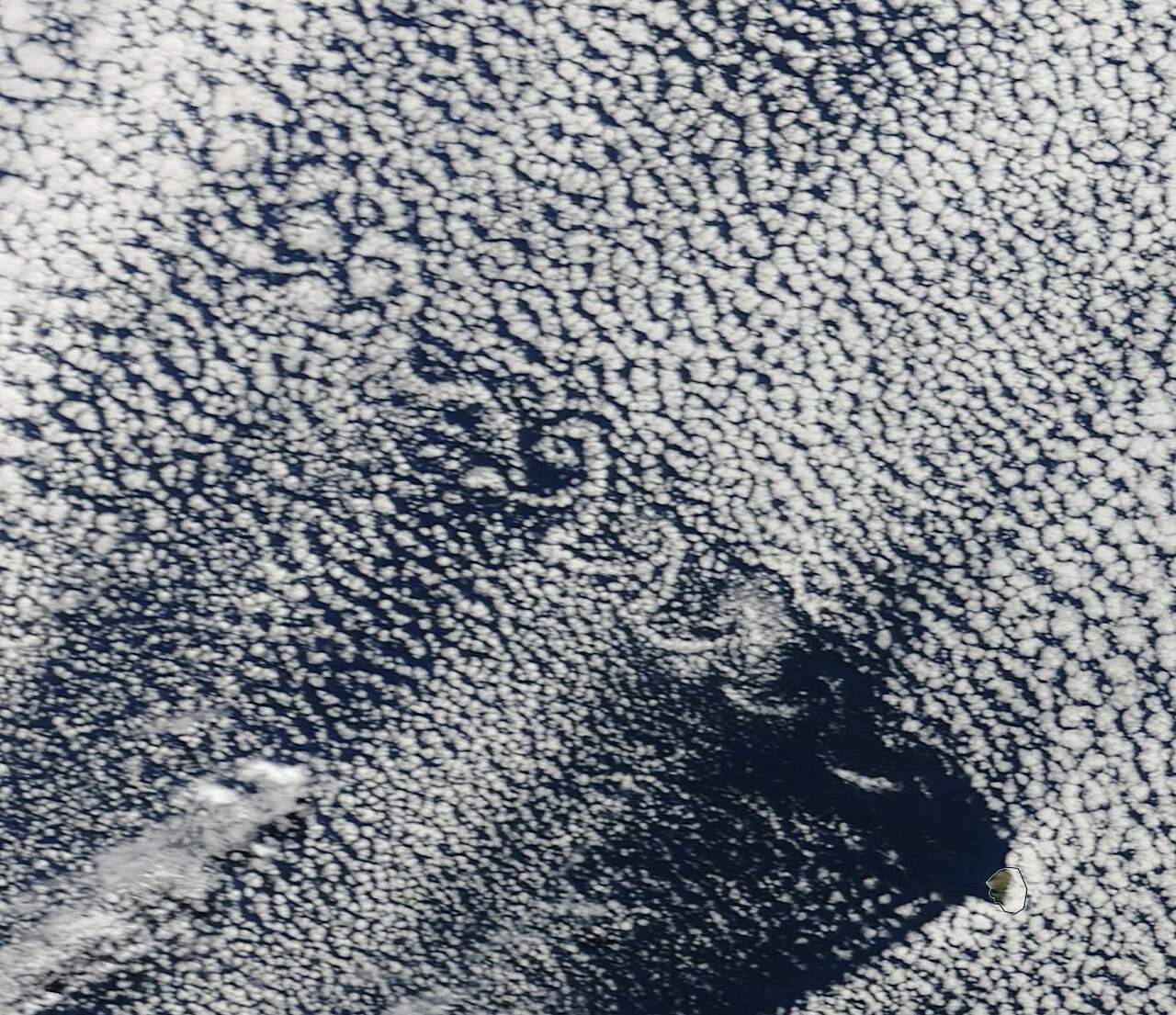
- Header image: a von Kármán vortex street off Alejandro Selkirk Island, NASA / Wikimedia Commons, public domain
